Older AdultsPolicy & Government
How Much Does Isolation Actually Move the Odds
A look at the effect sizes behind older-adult isolation policy, comparing odds ratios and hazard estimates across the major studies rather than treating statistical significance as the relevant threshold.
Center for Social Connection
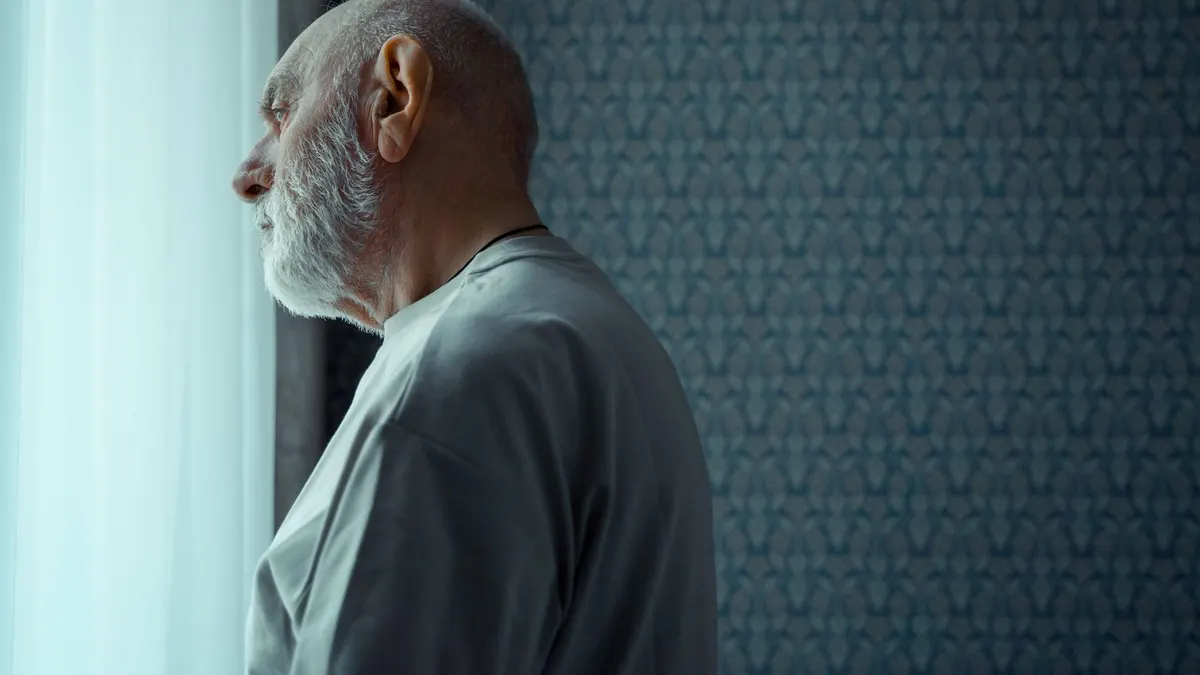
Policy documents on older-adult isolation tend to lead with prevalence: roughly a quarter of adults 65 and older are socially isolated, according to the National Academies’ 2020 consensus report. That figure is arresting, and it has done real work in getting isolation onto health-system agendas. But prevalence answers a different question than the one policy actually needs answered, which is: how much does isolation change a person’s risk, and is that change large enough to justify the intervention being proposed.
The two numbers are often quoted together as if they answer the same question. They do not.
The odds ratios are modest, not enormous
Julianne Holt-Lunstad’s 2015 meta-analysis in Perspectives on Psychological Science, covering studies that adjusted for baseline health status, reported an odds ratio of 1.29 for social isolation and early mortality, 1.26 for loneliness, and 1.32 for living alone. These are real effects. They are also, in the vocabulary of epidemiology, modest ones — closer to the size of effect associated with moderate air pollution exposure than to the size associated with heavy smoking, even though the “equivalent to smoking” framing has become the dominant public shorthand for this literature.
Her earlier 2010 meta-analysis in PLoS Medicine, pooling 148 studies and 308,849 participants, produced a more dramatic-sounding figure: a 50% increased likelihood of survival associated with stronger social relationships. That number circulates constantly in advocacy materials. It is worth being precise about what it is. A 50% relative increase in survival likelihood, pooled across studies with very different populations, follow-up periods, and definitions of “stronger relationships,” is not the same statistical object as an odds ratio of 1.29 from a more tightly specified later analysis. Both are true. They are not interchangeable, and treating the larger, older number as the operative one because it survived into more slide decks is a citation problem dressed up as an evidence problem.
What the American Heart Association actually found
The 2022 AHA scientific statement on isolation and cardiovascular and brain health, led by Crystal Cene, gives the field’s most granular effect sizes to date: a 29% increased risk of heart attack and/or death from heart disease, and a 32% increased risk of stroke, associated with social isolation or loneliness. These are hazard-ratio-scale findings pooled from observational cohorts, not trial results. The statement is unusually direct about what that means for interpretation. It says plainly that the absence of intervention evidence is the field’s central gap — that an association of this size, however consistently replicated, does not by itself demonstrate that intervening on isolation would reduce cardiovascular events by anything like 29% or 32%. The association could reflect isolation causing physiological harm, poor cardiovascular health causing isolation, or some third factor — depression, mobility loss, income — driving both.
This distinction matters more for older adults specifically, because reverse causation is more plausible in this group than in younger cohorts. A person who has had a stroke is more likely to become isolated as a consequence, not only isolated first and stroke-prone as a result.
Why the RCT evidence looks so thin next to the observational effect sizes
The intervention literature that would resolve this ambiguity barely exists. The HEAL-HOA trial, published in The Lancet Healthy Longevity in November 2024, tested prosocial engagement and volunteering against a control condition among lonely older adults in Hong Kong. It is notable mainly for being a randomised trial at all; a systematic review protocol on social prescribing for older adults, registered on medRxiv in July 2025, states that only one peer-reviewed randomised controlled trial exists in this specific area despite the intervention’s rapid adoption across health systems.
This is the asymmetry that effect-size scrutiny exposes. The observational literature produces precise-looking odds ratios and hazard ratios from cohorts with hundreds of thousands of participants. The intervention literature that would tell policymakers whether closing the isolation gap changes those odds is built on a small number of underpowered, largely uncontrolled studies. A statistically significant association in a 300,000-person cohort and a plausible-but-untested causal mechanism are not the same basis for a national screening mandate, even though both get cited in the same paragraph of policy documents.
The prevalence figures are moving; the effect sizes are not
AARP’s 2025 follow-up survey, Disconnected, uses the same UCLA Loneliness Scale instrument as its 2018 predecessor and reports rising loneliness among adults 45 and older — a genuinely comparable time series, unusual in this field. But a rising prevalence figure says nothing about whether the underlying odds ratio linking isolation to mortality or cardiovascular risk has changed. Prevalence and effect size move independently. A larger isolated population multiplies the same modest per-person risk across more people, which is a legitimate reason for public health attention, but it is a different argument than “isolation is becoming more dangerous,” which the current data does not support.
The National Academies’ commentary in the American Journal of Geriatric Psychiatry argues for routine clinical assessment of isolation on largely feasibility grounds — that it can be done in existing visits — rather than on a demonstrated reduction in downstream events from doing so. That is a defensible basis for a recommendation. It is a different basis than the one implied when a 1.29 odds ratio gets rounded, in public communication, into a mandate that sounds like it rests on something closer to certainty.
What would settle this is not another cohort study confirming the same modest odds ratio a ninth time. It is adequately powered randomised trials of specific interventions, measuring specific outcomes, in older-adult populations where reverse causation can be ruled out by design rather than assumed away by adjustment.
Sources
- Social Relationships and Mortality Risk: A Meta-analytic Review
- Loneliness and Social Isolation as Risk Factors for Mortality: A Meta-Analytic Review
- Social Isolation and Loneliness in Older Adults: Opportunities for the Health Care System
- Social Isolation and Loneliness in Older Adults: Review and Commentary of a National Academies Report
- Effects of Objective and Perceived Social Isolation on Cardiovascular and Brain Health: A Scientific Statement From the American Heart Association
- Social Isolation and Loneliness Increase the Risk of Death from Heart Attack, Stroke
- Loneliness and Social Connections: A National Survey of Adults 45 and Older
- Disconnected: The Escalating Challenge of Loneliness Among Adults 45-Plus
- The Effects of Volunteering on Loneliness Among Lonely Older Adults: The HEAL-HOA Dual Randomised Controlled Trial
- The Role of Social Prescribing in Alleviating Social Isolation and Loneliness in Older Adults: A Systematic Review Protocol