Isolation and Loneliness Are Not the Same Risk
A review of the older-adult literature finds isolation and loneliness are routinely measured, reported, and cited as if interchangeable, despite evidence that they carry independent risk and respond to different interventions.
Center for Social Connection
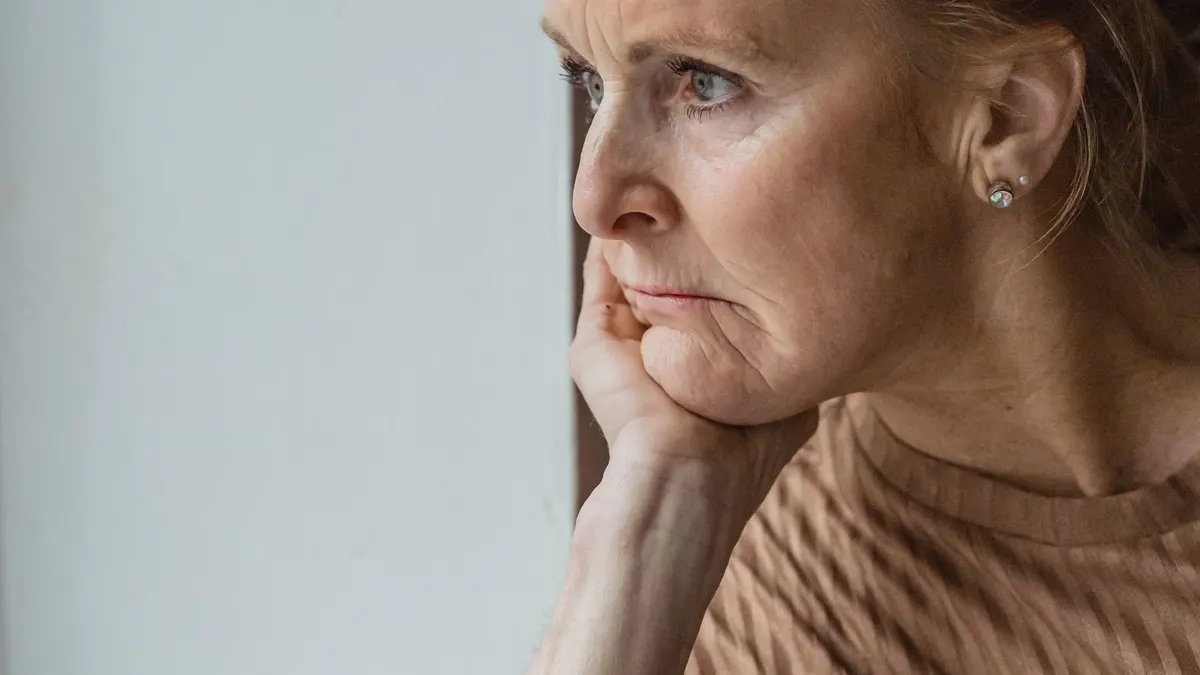
The National Academies’ 2020 consensus report put a number on social isolation among older Americans: roughly one in four adults aged 65 and older meet criteria for it. The same report, and much of the commentary that followed it, moves between that figure and loneliness prevalence figures within a paragraph or two, as though the two were the same problem measured twice. They are not. Isolation describes the structure of a person’s network — how many people are in it, how often contact occurs, whether it includes a confidant. Loneliness describes a subjective state — the felt gap between the connection a person has and the connection they want. A person can be surrounded by contact and still report loneliness. A person can live with almost no contact and report none.
Holt-Lunstad’s 2015 meta-analysis in Perspectives on Psychological Science is the clearest evidence that this distinction is not academic hair-splitting. Looking across studies with a combined sample large enough to separate the two constructs, it reported an odds ratio of 1.29 for social isolation and 1.26 for loneliness on early mortality, with living alone carrying its own separate risk at 1.32. These are close in magnitude but statistically independent: isolation predicted mortality risk after controlling for loneliness, and loneliness predicted it after controlling for isolation. If the two were simply the same underlying thing measured with different instruments, one would expect the association to collapse once the other was accounted for. It did not.
Why the conflation happens
Part of the problem is instrumental. The AARP Foundation’s 2018 national survey of 3,020 adults 45 and older used the 20-item UCLA Loneliness Scale — a genuinely comparable, well-validated measure of the subjective state — and found that one in three respondents qualified as lonely. Its 2025 follow-up, Disconnected, used the same instrument, which is unusual in this literature and makes the two AARP surveys among the few that can be compared to each other directly. But surveys of isolation typically ask different questions entirely: network size, frequency of contact, number of close relationships, whether someone lives alone. These are structural counts, not felt states, and they do not track the UCLA scale closely enough to be treated as a proxy for it.
The result is that a report citing “one in four isolated” and a report citing “one in three lonely” can be describing the same population of older adults through two different lenses, and a reader skimming both walks away with the impression that a third to a quarter of older people share a single problem. AARP’s own 2018 data undercuts that shortcut. It found that among respondents who had spoken with their neighbours, 33% were lonely; among those who never had, 61% were. Neighbour contact is a structural, isolation-side variable. Loneliness moved with it, sharply — but not in lockstep, since a third of people with regular local contact were still lonely. Contact reduces the odds of loneliness. It does not eliminate it.
A 2024 study in Scientific Reports, examining the interplay between isolation, age, and loneliness during the pandemic, addressed this directly and found that the relationship between the two constructs itself varies by age group — meaning even the correlation between isolation and loneliness is not a fixed, portable number. A more recent study, published in early 2026, went further and asked which socially isolated older adults were actually at elevated risk of loneliness, implicitly treating isolation as the population and loneliness as a variable outcome within it rather than a synonym. That is the correct framing, and it is rarer in this literature than it should be.
What follows for intervention design
This distinction is not merely definitional housekeeping. It determines what an intervention should look like, and the randomized trial evidence on older adults now available is specific enough to show the two constructs respond differently to the same programme.
The HEAL-HOA trial, published in The Lancet Healthy Longevity in 2024, tested prosocial engagement and volunteering against a control among lonely older adults in Hong Kong. Volunteering increases contact — it is fundamentally a structural, isolation-side intervention, since it puts a person in a room with other people on a schedule. A separate 2025 randomised trial of befriending in residential aged care, published in Clinical Gerontologist, found that structured one-to-one befriending reduced UCLA Loneliness Scale scores by 2.39 points at eight weeks and 2.71 points at sixteen weeks relative to control. Befriending, too, is largely a contact intervention: it supplies a relationship where one was structurally absent.
Both worked, to a degree, on loneliness scores. But a third trial, the 2026 HEAL-HOA behavioural activation and mindfulness study, is the one that complicates the picture. In a sample of 1,151 older adults living in poverty, alone, and digitally excluded, telephone-delivered behavioural activation and mindfulness — eight 30-minute sessions over one month, delivered by trained laypeople who were themselves older adults with lived experience of loneliness — produced significantly greater reductions in loneliness at twelve months than befriending did, in a head-to-head comparison. Befriending is the most common real-world intervention deployed against loneliness in aged care and social prescribing programmes. In this trial, it was outperformed by an intervention that did not increase network size or contact frequency at all. It changed how participants related to solitude, not how much of it they had.
That is a direct empirical demonstration of the distinction this piece is arguing for. If loneliness were simply the subjective readout of isolation, then adding contact should be close to sufficient, and a psychological intervention delivered entirely by phone should not outperform a relationship-based one over a year. It did. The mechanism worth naming is that isolation is a solvable engineering problem — more contact, more roles, more scheduled encounters — while loneliness is a solvable psychological one, and the two solutions are not interchangeable even when the same population needs both.
What the surveillance literature still gets wrong
Most national tracking remains built around one construct at a time, usually loneliness, and reports isolation prevalence as an afterthought using whatever proxy is convenient — living alone, contact frequency, network size — without validating that the proxy predicts the same outcomes the loneliness scale predicts. The BMC Public Health review of the state of loneliness and social isolation research, published in 2023, flagged inconsistent measurement across the field as a structural barrier to comparing studies, and the problem it describes has not been resolved by the volume of research published since. A 2026 longitudinal study of community-dwelling older adults in the United States examined how isolation and loneliness track separately against well-being over time, which is the right design question, but this kind of study remains the exception rather than the rule in a literature still dominated by single cross-sectional snapshots that report both figures side by side without testing whether they move together.
What would settle it
A stronger evidence base would report isolation and loneliness as co-measured, independent variables in every survey and every trial, rather than letting one stand in for the other in headline figures. It would use consistent instruments across studies — the way AARP’s 2018 and 2025 surveys used the same UCLA scale, which is rare enough to be notable — so trends over time reflect the population and not a change in the yardstick. And it would run more head-to-head trials like HEAL-HOA’s 2026 comparison, testing contact-based interventions against psychological ones in the same sample, because that is the only design that can say which lever moves which outcome. Absent that, policy language that treats “isolated” and “lonely” older adults as one group invites programmes that increase contact for people whose problem was never a shortage of it.
Sources
- Loneliness and Social Isolation as Risk Factors for Mortality: A Meta-Analytic Review
- Social Isolation and Loneliness in Older Adults: Opportunities for the Health Care System
- Social Isolation and Loneliness in Older Adults: Review and Commentary of a National Academies Report
- Loneliness and Social Connections: A National Survey of Adults 45 and Older
- Disconnected: The Escalating Challenge of Loneliness Among Adults 45-Plus
- Understanding the Interplay Between Social Isolation, Age, and Loneliness During the COVID-19 Pandemic
- Risk Factors of Loneliness in Community-Dwelling Socially Isolated Older Adults
- Longitudinal Association Between Social Isolation, Loneliness and Well-Being Among Community-Dwelling Older Adults in the United States
- The Effects of Volunteering on Loneliness Among Lonely Older Adults: The HEAL-HOA Dual Randomised Controlled Trial
- Randomized Controlled Trial on the Impact of Befriending on Depression, Anxiety, Loneliness, and Social Support in Older People in Aged Care
- Behavioral Activation and Mindfulness Interventions in Reducing Loneliness and Improving Well-Being in Older Adults: The HEAL-HOA Randomized Clinical Trial
- The State of Loneliness and Social Isolation Research: Current Knowledge and Future Directions